

Being charged with a traffic offence can be a serious and stressful experience, particularly where you rely on your driver’s licence for work, study, family responsibilities or everyday life. Depending on the offence and your circumstances, a traffic matter can result in loss of your driver’s licence, a criminal record, significant fines or even imprisonment.
However, being charged with a traffic offence does not necessarily mean you will be convicted. The circumstances surrounding each allegation are different, and there may be issues with the prosecution’s case, available evidence or the circumstances in which the alleged offence occurred.
Obtaining legal advice early can help you understand the charge, assess the available evidence and determine the most appropriate way to respond.
Our expert traffic lawyers can help you:
- Keep your driver’s licence.
- Be found not guilty.
- Avoid a criminal record where legally available.
- Receive a more lenient sentence.
- Appeal a licence suspension or disqualification where appropriate.
You will be represented by a team of award-winning criminal and traffic lawyers with 500+ five-star Google reviews who offer fixed fees and free first consultations. Our traffic lawyers have at least 5 years of experience, and we represent clients throughout NSW.
You can read our reviews here.
What to do if you are charged with a traffic offence
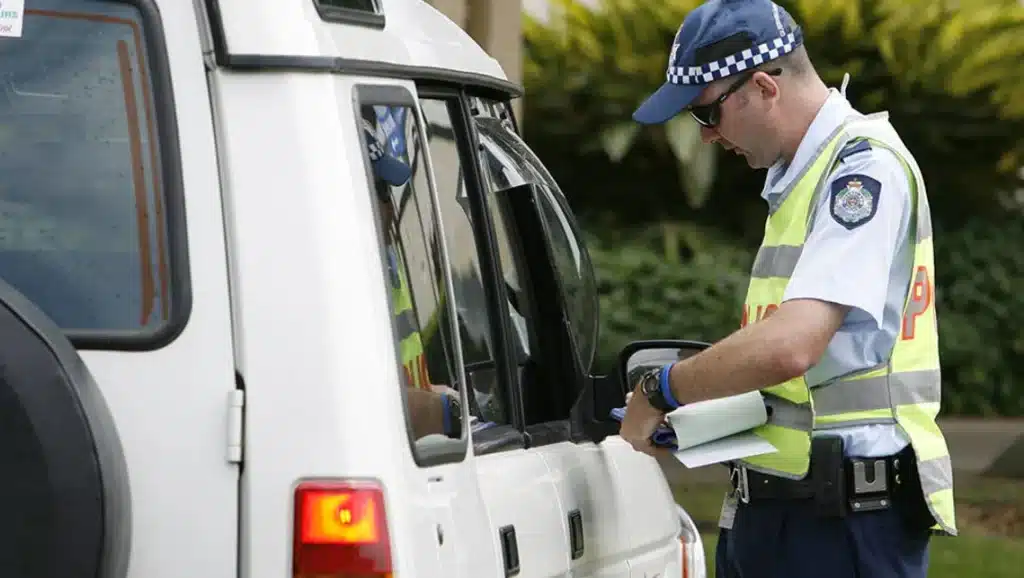
Traffic offences can arise in many different circumstances. Depending on the allegation, police may stop you at the roadside, conduct a breath or drug test, issue a penalty notice or court attendance notice, or arrest and charge you for a more serious offence.
The consequences of a traffic offence can extend beyond the immediate penalty. Losing your licence can affect your employment, income, family responsibilities and ability to travel, while more serious traffic offences can result in a criminal record or imprisonment.
If you have been charged with a traffic offence, obtaining legal advice before deciding how to proceed can help you understand your options.
Seek legal advice immediately
If police have charged you with a traffic offence or you have received a court attendance notice, it is important to understand the allegation and the potential consequence before your matter comes before the court.
Your lawyer can assess the circumstances of the alleged offence, review relevant documents and evidence, and advise you whether the matter should be defended or whether you should plead guilty and prepare for sentencing.
For offences involving your driver’s licence, early legal advice can also be important because the consequences of a conviction may extend beyond the court penalty itself.
Do not ignore your charge
A traffic charge should not be ignored simply because it appears to be a minor offence. Some traffic offences carry significant licence consequences, while repeated offending can result in increasingly serious penalties.
If you have received a court attendance notice, suspension notice or other documentation concerning your licence, provide it to your lawyer as soon as possible. Your lawyer can explain what the document means and what steps need to be taken.
Answer your traffic lawyer’s questions
Your lawyer needs an accurate understanding of what occurred in order to properly assess your matter. Be honest when explaining the circumstances of the alleged offence, including information that you may consider unhelpful.
Your lawyer may need information about where and when you were driving, your licence history, previous traffic offences, employment, family responsibilities, medical circumstances and any other factors that may be relevant to the charge or potential sentence.
Providing complete information allows your lawyer to properly assess your position and develop an appropriate strategy.
Gather evidence to give to your lawyer
Evidence can be important in defending a traffic offence or preparing for sentencing. Depending on the nature of your matter, relevant material may include:
- Police paperwork, court attendance notices or infringement notices.
- Breath, blood or oral fluid testing information.
- Dashcam or CCTV footage.
- Photographs or video recordings.
- Medical records or reports.
- Documents relating to your employment.
- Evidence of your driving or licence history.
- Information about your personal and family circumstances.
- Documents demonstrating the consequences of losing your licence.
Your lawyer can assess whether the material is relevant to your defence or may assist in presenting your case to the court.
Do not destroy or alter evidence
Do not delete, destroy, alter or conceal material that may be relevant to your traffic matter. This includes photographs, videos, messages, dashcam footage or other electronic records.
Preserve relevant material in its original form and provide it to your lawyer so that they can properly assess whether it assists your case.
Pleading not guilty
If you plead not guilty to a traffic offence, the prosecution must prove the elements of the particular offence beyond a reasonable doubt.
The issues that need to be established will depend on the charge. For example, a matter involving drink driving may involve questions about the reliability or circumstances of the testing process, while a dangerous or negligent driving charge may involve questions about the manner of driving and the circumstances surrounding the alleged incident.
In drug-driving matters, the circumstances surrounding the testing process and the evidence relied upon by the prosecution may also be relevant.
The precise issues that arise will depend on the offence charged, the evidence available and the circumstances of your case.
If there is a reasonable doubt about an essential element of the offence, the prosecution may be unable to establish the charge beyond a reasonable doubt.
You can read a detailed article about pleading not guilty here.
Defences to traffic offences
The appropriate defence will depend on the particular traffic offence and the circumstances of the allegation. Our traffic and criminal lawyers can assess the prosecution’s case and identify issues that may provide a basis for defending the charge.
Depending on the offence, potential issues may include:
- The prosecution cannot prove an essential element of the offence.
- The driving was not negligent, reckless or dangerous as alleged.
- Identification or evidence relied upon by the prosecution is unreliable.
- There are issues concerning testing, analysis or assessment.
- The circumstances surrounding a breath or drug test raise an issue relevant to the charge.
- A lawful defence or other recognised legal exception applies.
- The evidence does not establish the offence beyond a reasonable doubt.
Some traffic offences can also involve specific technical or evidentiary issues. An experienced traffic lawyer can review the evidence and determine whether there is a proper basis to challenge the charge.
Pleading guilty
If you intend to plead guilty to a traffic offence, our experienced traffic lawyers can assist you in preparing your matter for sentencing and seeking the most favourable outcome available in the circumstances.
Depending on the offence and your circumstances, we may assist with:
- Preparing sentencing submissions seeking the most lenient outcome available.
- Negotiating with prosecutors regarding the charge or agreed facts where appropriate.
- Preparing character references and evidence about your personal circumstances.
- Preparing evidence about the consequences of losing your licence.
- Obtaining psychological, psychiatric or medical reports where relevant.
- Referring you to a Traffic Offender Intervention Program where appropriate.
- Assisting with an apology letter where appropriate.
- Gathering documents such as employment contracts, medical documents, timetables and transport information.
- Identifying counselling, treatment or other programs that may assist with rehabilitation.
For some traffic offences, an outcome without a conviction may be available depending on the circumstances. Our lawyers can assess whether such an outcome should be sought in your case.
The court may consider a range of factors when determining the appropriate sentence, including:
- The nature and seriousness of the traffic offence.
- Your traffic and criminal history.
- Whether you have previously committed similar offences.
- Your level of responsibility for the offending.
- Whether you have entered an early guilty plea.
- Your prospects of rehabilitation.
- Your employment and financial circumstances.
- Your family responsibilities.
- The consequences of losing your driver’s licence.
- Any steps you have taken to address relevant underlying issues.
You can read a detailed article about pleading guilty here.
No Conviction
A finding of guilt does not necessarily mean that a conviction must be recorded in every traffic matter. Depending on the offence and your circumstances, the court may have discretion to deal with the matter without recording a conviction.
A non-conviction outcome can be particularly important because a conviction may affect your employment, professional opportunities and other aspects of your life.
Whether a non-conviction outcome is available will depend on the particular offence and your individual circumstances. Your lawyer can advise you about whether it is appropriate to seek such an outcome and prepare submissions addressing the relevant factors.
Our traffic lawyers regularly seek outcomes that allow eligible clients to avoid a criminal record and, where possible, retain their driver’s licence.
What traffic offences do we defend?
Our traffic lawyers represent clients charged with a wide range of traffic offences, including:
- Drive with illicit substance in system (drug driving)
- Driving under the influence
- Drink driving (PCA)
- Driving whilst suspended or disqualified
- Driving whilst unlicensed
- Negligent driving occasioning grievous bodily harm or death
- Refusal or failure to submit to test, analysis or assessment
- Driving furiously, recklessly or at a speed or in a manner dangerous
- Dangerous driving occasioning grievous bodily harm or death
- Police pursuit offences
- Street racing
- Predatory driving
- Mobile phone offences
- Failing to stop and assist after an impact causing injury
- Red light camera offences
Experienced NSW Traffic Lawyers
Being charged with a traffic offence can have consequences well beyond the courtroom. Losing your driver’s licence can affect your ability to work, support your family and manage your everyday responsibilities. More serious offences may also result in a criminal record or imprisonment.
Our traffic lawyers assist clients with both defended traffic matters and guilty pleas. We can assess the circumstances of your case, advise you about your options and represent you in court where required.
We also assist with driver licence appeals, including applications to retain or regain a licence following suspension or disqualification. Our traffic lawyers appear in licence appeals against Roads and Maritime Services and assist clients in seeking to keep their licences where legally available.
Free First Consultation
Being charged with a traffic offence can leave you uncertain about what happens next and whether you will lose your licence. Australian Criminal Law Group offers a free, confidential and no-obligation first consultation with an experienced traffic lawyer.
During your consultation, we can:
- Listen to your account of what happened.
- Explain the charge and the court process.
- Discuss the potential consequences for your licence and criminal record.
- Review the circumstances surrounding the alleged offence.
- Discuss potential defence options.
- Advise you about preparing for sentencing if you intend to plead guilty.
- Answer your questions and explain the next steps available to you.
Our traffic lawyers provide free first consultations in person, by phone and by video conference.
Fixed Fees Available
For eligible traffic matters, we may be able to offer fixed-fee representation, giving you greater certainty about your legal costs from the outset.
Our traffic lawyers offer fixed fees for a range of traffic offences and licence matters, including selected drink-driving, drug-driving and suspended or disqualified driving matters. The applicable fee will depend on the offence, your previous history and the complexity of the case.
Payment plans may also be available for clients who require greater flexibility when managing their legal costs.
Read more about our fixed fees here.
How to Prepare
To make your first consultation as useful as possible, it is helpful to bring any documents and information relevant to your traffic matter. Where available, this may include:
- Any court attendance notices, infringement notices, suspension notices or other documents provided by police or Transport for NSW.
- Documents relating to your driver’s licence and previous traffic offences.
- Breath, blood or drug-testing documents.
- CCTV, dashcam footage, photographs or other recordings.
- Medical documents or reports that may be relevant to the allegation.
- Employment documents or other evidence showing why you rely on your driver’s licence.
- A list of questions or concerns you would like to discuss.
- A clear timeline of the events leading to the alleged traffic offence.
The more information you can provide, the better your lawyer can understand your circumstances, assess the allegations and advise you about the options available.
Book Your Free Consultation
If you have been charged with a traffic offence, contact Australian Criminal Law Group for a free first consultation with an experienced traffic lawyer.
We offer appointments in person, by phone or via video conference from our offices in Sydney CBD, Parramatta and Blacktown. Our lawyers represent clients throughout NSW.
Our team of criminal lawyers has 500+ 5-star reviews on Google and 60 years of combined experience, with each lawyer having 5 to 20 years of criminal law experience. You can read our reviews here.
Contact us now to discuss your traffic matter and learn how our traffic lawyers can assist you.
Case studies
Drive with illicit substance in system – Found not guilty
Our criminal defence lawyer represented a client who was charged with driving with an illicit substance in their system. Our client was subject to a roadside swab that produced a positive to methylamphetamine. He was taken back to the police station to give a second sample. The officer testing him swabbed him, then dropped the swab on the table before picking it up and sending it to the laboratory for analysis. The second swab came back positive, and the client was charged. Our client pleaded not guilty and subpoenaed police footage of the second test. Our lawyer argued that the evidence should be excluded because of improper testing procedures that posed a risk of contamination. Our client was found not guilty.
Drink Driving – No conviction recorded
Our lawyer represented a woman charged with High Range PCA. She was stopped for speeding on a street. Our lawyer put forward to the Magistrate that she only drove the car to escape a threat of domestic violence. She was stopped less than 100 metres from where her partner had attempted to assault her. The Magistrate accepted the reason for her driving and dismissed the charge under section 10 and did not record a conviction.
Driving whilst unlicensed – No disqualification
Our lawyer represented a young woman charged with Drive whilst disqualified. At the time our lawyer appeared for her she had been sentenced (unrepresented) for two other drive whilst disqualified offences in prior months and was disqualified for five years. Our Lawyer appealed all her sentences to the District Court, obtaining leave from the judge to appeal on the basis that the client was unrepresented. At the District Court appeal, the homelessness, mental health and need for a licence of the client were raised, and all three charges of driving whilst disqualified were dismissed pursuant to section 10, and there was no disqualification.
Negligent driving occasioning grievous bodily harm or death – No jail time
Our lawyer represented a man charged with Dangerous driving occasioning death. He had been driving a car under the influence of alcohol when a passenger and his best friend began to car surf on the roof of the car. Tragically, his friend fell to his death. Before a judge, the tragic circumstances of the case were presented. The mother of his deceased friend gave evidence of her forgiveness and love for our client. At the end of the emotional sentencing proceedings, the judge did not send our client to jail; instead, he imposed an Intensive Correction Order.
Refusal or failure to submit to test, analysis, or assessment – Found not guilty
Our lawyer appeared for a man who was incorrectly charged with failing to submit to a breath test, a fine-only offence. He should have been charged with Refuse breath analysis, an offence carrying a maximum penalty of 18 months’ imprisonment and an automatic disqualification of 3 years. Both charges had to be laid within six months of the allegation. Our solicitor entered a plea of not guilty, and by the time of the defended hearing, the police were not allowed to lay the more serious offence, and our client was found not guilty of all charges.
Driving furiously, recklessly or at a speed or in a dangerous manner – Section 32 application
Our lawyer represented an 18-year-old charged with Driving in a dangerous manner and Driving whilst disqualified. It was his fourth Drive whilst disqualified offence, and the driving involved nearly running over a group of friends in a drag race. Our lawyer tendered a psychological report and made a section 32 application. He argued the 18-year-old had a history of depression that had been treated following his prior incident of offending. Our lawyer further argued that there had been a relapse in his mental condition following a tragic accident involving a family member. The Magistrate agreed there was a causal link between the offending and the depression. He dismissed the charge pursuant to section 32, and the 18-year-old was able to keep his licence.
Police pursuit – Reduced sentence
Our lawyer represented a client charged with 2 police pursuits in a matter of weeks. The pursuits took place during the day in an area with many people present. Our lawyer convinced the magistrate to impose a good behaviour bond and a one-year disqualification on his client.