

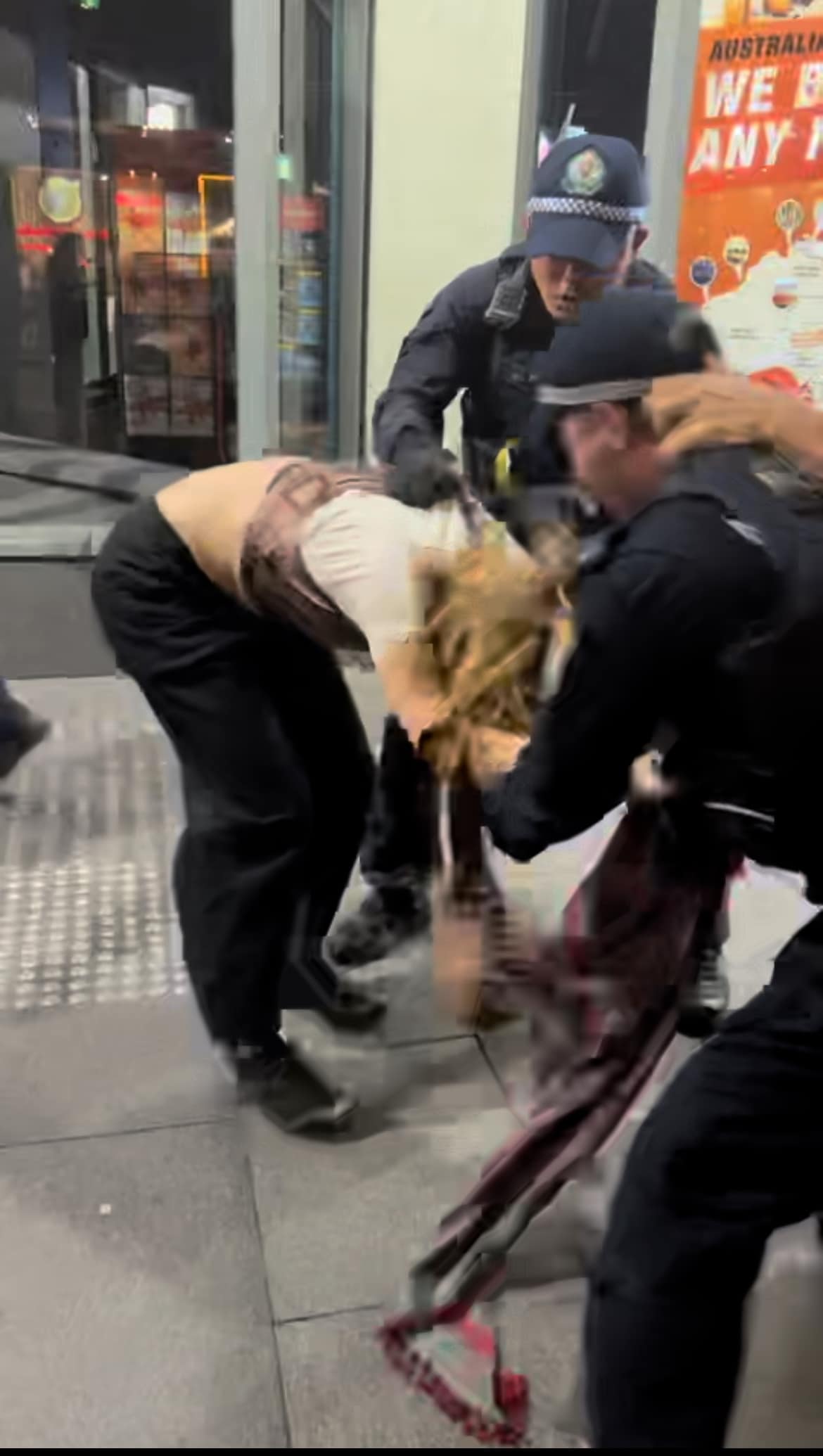
Following the protests in Sydney yesterday, many peaceful protesters were left confused and distressed after police intervened and used force, including tear gas against them, leaving some injured.
If you are confused about what your rights are while protesting, you are not alone. Many people assume that if a protest is peaceful, the police have no power to intervene. In NSW, that is not always the case.
Freedom of expression and peaceful assembly are protected at common law and under international human rights principles; however, they are not absolute. Police have a range of statutory powers that allow them to intervene in protests in certain circumstances, even where no violence has occurred.
Police can legally stop protestors who are at risk of:
- Obstructing traffic
- Harming the public
- Involving an unlawful assembly
- Harassment or intimidation
A peaceful protest does not prevent police from exercising their powers.
How did the protest on 9 February 2026 end so violently?
As social media is flooded with clear examples of police displaying arbitrary power, it is important to understand how this was even possible.
Initially, the Supreme Court provided sweeping powers to the police during the Israeli president’s visit to Australia. The Supreme Court declared the visit a ‘major event’ under state law. This provided the police with the power to shut down parts of the city and the eastern suburbs.
The Palestinian Action Group appealed the judgment; however, the Supreme Court judge rejected the urgent legal challenge.
This contrasts with the Supreme Court’s judgment in October last year. The Supreme Court ruled in favour of the Palestinian Action Group. The judgment found that the government’s protest laws around places of worship were unconstitutional.
Due to the declaration of a ‘major event’ police were provided with more power, which was used unfairly.
The regular police powers in NSW
Police may have the power to:
- Issue move-on directions
- Arrest protesters in certain circumstances
- Seize items being used unlawfully
- Impose conditions on assemblies or gatherings
If a police officer gives you a lawful direction, you are generally required to comply. Refusing or failing to comply can result in legal ramifications. You may be charged with failure to comply with police directions.
However, if a direction is unlawful or unreasonable, it may be challenged later in court. The safest course at the time is usually to comply and seek legal advice afterwards. If you believe you have been subjected to unlawful conduct by a police officer at a protest, contact us now.
If you are approached by police at a protest, it is essential to understand your rights.
You must provide both your name and address, but you don’t have to answer any other questions. Additionally, you have the right to remain silent and to legal advice.
Laws surrounding protesting in NSW are constantly changing. If you have any concerns or questions, contact us.
Penalties for protest-related offences
Certain offences attract maximum penalties of two years’ imprisonment or substantial monetary fines, regardless of whether the protest involved violence.
As a protestor, you may be charged with:
- Trespassing
- Failure to comply with police direction
- Damage to property
- Obstructing traffic
Even when charges may seem minor, the legal complexity can be significant. Seeking legal advice is essential if you are being charged for a protest-related offence.
What should you do if you were affected by yesterday’s protest?
Whether you were questioned, injured, arrested or exposed to tear gas as a result of the arbitrary powers used by police yesterday, you can seek legal advice. You should:
- Seek medical care: these medical records are crucial, especially when the use of force is disputed.
- Secure CCTV and mobile phone footage of the incident, and anything available to the public.
- Document everything while it is fresh.
- Contact any witnesses if possible.
- Contact a lawyer as soon as possible.
At Australian Criminal Law Group, we offer a free first consultation. This is an excellent opportunity to meet one of our experienced and proven criminal lawyers face-to-face, share the details about your case, and ask any questions you might have. All first consultations are obligation-free and conducted in the strictest confidence. You can read more about our first free consultation here.
Our team of criminal lawyers has 500+ 5-star reviews on Google and 60 years of combined experience, with each lawyer having 5 to 20 years of criminal law experience.
You can read our reviews here.